A battery bought for load-shedding sits idle most of the time. Put it to work on the demand charge and the time-of-use tariff and it earns every weekday.
For many industrial businesses a battery starts as a grudge purchase: an expensive insurance policy against load-shedding that sits idle most of the time, waiting for the grid to fail.
Treating a commercial battery purely as backup leaves most of its value unused. With the right controls it earns every weekday, through two levers in the way South African tariffs are built.
For industrial and large commercial users, the bill is not only about how much energy you use. The demand charge is the part of a business electricity bill based on the highest power the site draws in the month, separate from the energy it uses. Measured in kVA, it can be set by a peak that lasted fifteen minutes while heavy machinery started up.
Peak shaving watches the load in real time. When demand threatens to cross a set limit, the battery discharges to cover the gap, and the month’s demand charge is set by the limit, not the spike.
Most industrial clients are on time-of-use tariffs, where power in the peak windows can cost three to four times the off-peak rate (Eskom Megaflex tariff, Tariff Book 2026/27). Arbitrage is simple: charge the battery when power is cheap, and run the site from it through the peak.
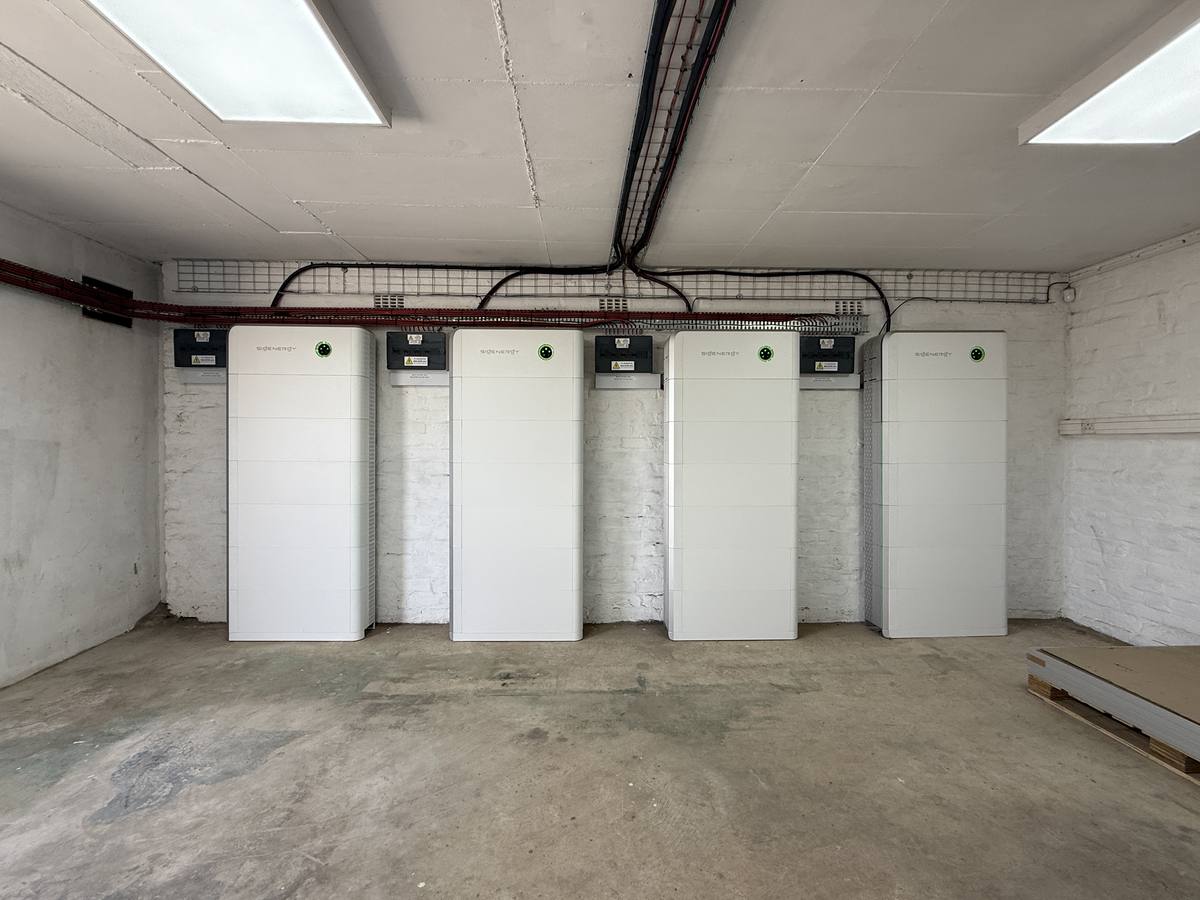
When you put the two together, the savings are exponential. On a catalytic converter factory in Retreat, a 900 kWh battery with no solar attached took 13.5% off the bill in its first year and paid for itself in 4 years 7 months.
We model these scenarios from your interval data before you spend anything, and size the battery for its daily return, not just for load-shedding.
Sources: Eskom Tariff Book 2026/27; NERSA, Eskom retail tariffs 2026/27.

Eskom increases have compounded every year since 2011/12. What that does to a three-year budget, and how to fix the price of your daytime power.
Read
Generate where the sun and the land are cheapest, and credit the power against the bills of sites that have no roof to spare.
ReadSee if your site qualifies in a few minutes.
